• About Me

Spiritual Food for Women

  • Do Whatever He Tells You To Do

    May 3rd, 2025

    John 2:1-12

    1 On the third day there was a wedding in Cana of Galilee, and the mother of Jesus was there. 2 Now both Jesus and His disciples were invited to the wedding. 3 And when they ran out of wine, the mother of Jesus said to Him, “They have no wine.” 4 Jesus said to her, “Woman, what does your concern have to do with Me? My hour has not yet come.” 5 His mother said to the servants, “Whatever He says to you, do it.” 6 Now there were set there six waterpots of stone, according to the manner of purification of the Jews, containing twenty or thirty gallons apiece. 7 Jesus said to them, “Fill the waterpots with water.” And they filled them up to the brim. 8 And He said to them, “Draw some out now, and take it to the master of the feast.” And they took it. 9 When the master of the feast had tasted the water that was made wine, and did not know where it came from (but the servants who had drawn the water knew), the master of the feast called the bridegroom. 10 And he said to him, “Every man at the beginning sets out the good wine, and when the guests have well drunk, then the inferior. You have kept the good wine until now!” 11 This beginning of signs Jesus did in Cana of Galilee, and manifested His glory; and His disciples believed in Him. 12 After this He went down to Capernaum, He, His mother, His brothers, and His disciples; and they did not stay there many days.

    As chapter 2 begins, we find Jesus and His disciples invited to a wedding in the city of Cana. His mother is already there. Cana is about 9 miles north of Nazareth. In verse 3, we see a problem has arisen. The family hosting the wedding had run out of wine. At a Jewish wedding, not having wine would be like not having sweet tea in the south. And not only that, weddings were celebrated for an entire week, not just a few hours. People came from longer distances I’m sure, and the host family not being properly prepared for all the guests who came would have been a disaster and an embarrassment. Obviously, Mary was very concerned. She was probably close to the family or she wouldn’t have been invited. As women, don’t we want to fix the problem immediately? Mary is being a typical woman/mother. She goes to her son, whom she knows can help with the problem, and tells Him that they are out of wine. Now….when Jesus calls His mother, “woman”, how many of us thought He was being harsh and disrespectful towards her? In today’s world, if anyone addresses us as “woman”, we take it personal, don’t we? We feel disrespected, and it is usually meant that way today.  I used to think He was being harsh, maybe even reprimanding her. But He wasn’t. Here are all the other times that Jesus addressed women as “woman”, Matt. 15:28 (woman with possessed daughter, Luke 13:12 (woman with the issue of blood), John 4:21 (woman at the well), John 8:10 (woman caught in adultery), John 19:26 (to His mother as He hung on the cross), and John 20:15 (to Mary Magdalene after His resurrection). In all of these instances, Jesus is showing honor in calling the person “woman”. It would be the equivalent of “miss” today. Why didn’t He address her as “mother” instead of “woman”? This could have been a reference back to Genesis 3:15 where God promised that a “woman” would bruise the serpent’s head. It also could be that Jesus wanted to separate Himself from her to let her know that He would take care of this problem without her help. I’m not sure. Anyway, Jesus says to her, “Woman, what does your concern have to do with Me? My hour has not yet come.” Does this mean that Jesus was not concerned with the problem? No, not at all. We can see that He is concerned about it because of Mary’s response to Him. She took what He said to mean that He was going to take care of the problem. Here is what the commentaries that I have studied say that Jesus meant by His question to Mary. Jesus is saying, paraphrasing in today’s language, “Woman, do you think this is a problem for you to be concerned about with Me here. I have got this, but only on My Father’s timetable. It is not time for me to fully reveal myself.” Mary took this as her cue to step back and let her son work, as she simply said “do what He says”. Only the servants, the disciples, and Mary knew about this “sign” when it happened (John 2:11). Jesus did this specifically so His disciples would believe (John 2:11). The water pots were not filled with drinking water. The water was for the Jews’ ceremonial washing before eating. 

    Wine symbolizes God’s blessings in scripture. (Jer. 48:33, Prov. 3:10, Psalms 104:15) It also represents God dwelling with His people to bless and restore them one day. (Isa. 25:6, Joel 3:17-18, Amos 9:13-15) I found the coolest symbolic representation of this account on West Palm Beach coC’s website, and wanted to share it here. The wedding being out of wine symbolizes the Jews’ relationship with God….they were separated from Him. Jesus’ removal of the purification water pots represents the removal of the old law in the future. There would be no more ceremonial washing rituals. Jesus will be the spiritual cleansing that everyone needs. Jesus restores the “wine” or blessings to the people. Jesus is the wine. He provides the blessings. Also, the fact that the new “wine” was better than the original wine is a parallel to the new covenant being superior to the old law. Jesus brings better blessings, just like He brought better wine to the guests at the wedding. And….He brings those blessings in abundance, hence the sheer magnitude of wine that He provided which was more than the people could ever drink. I really loved this explanation when I ran across it. I had never thought about this account this way before. 

    This event is called a “sign”, instead of a miracle. Not that it wasn’t a miracle, but a sign has a deeper meaning. It reveals and represents something more than we see on the surface. Think about physical signs that we see everyday. They reveal directions, instructions, or information that help us understand our world. This “sign” revealed Jesus’ deity to His disciples. It revealed His glory and power to them. It helped them know that they could trust Him. This was what the “sign” was intended for. Jesus could read the disciples’ minds. He knew the exact right moment to reveal His power to them to have the desired effect….which was their belief in Him. And…..it was only the beginning! I find it interesting that His brothers were with the crew in verse 12 when they traveled from Cana to Capernaum. However, they were not a part of the “sign” at the wedding. I wonder if Mary told them about it. Later, in John 7:3-5, we are told that His brothers did not believe in Him. So even if Mary did tell them about the miracle at Cana, it is not likely that they would have believed her anyway. 

    Sidenote…..I have to mention this. This account is not recorded to give us permission or an excuse to drink alcohol as Christians. That is not John’s purpose for including it at all. Jesus would never have made intoxicating wine for this wedding. Let’s remember that everything Jesus did while He was here on earth was to bring glory to God. If Jesus had made intoxicating wine for people to get drunk on, would that have been glorifying God? Would that have been God’s will? If we drink alcohol, whether it’s one drink or ten drinks, are we glorifying God? And, don’t get me wrong, we can ask this question about anything we do…..things we watch on tv, language we use, gossiping, etc. I know I’m guilty of some of these things, namely tv shows and movies. I know I need to consider whether what I’m watching is something a Christian should be watching. I’m only pointing out alcohol use, because I’ve heard so many people use this account of Jesus turning the water to wine to justify drinking, and it is not about that. The word wine was used interchangeably for grape juice and the fermented beverage in the bible. Below, I have included two links to lessons on the subject of alcohol for you to consider. They are really good, so check them out. 

    Let’s go back to the title of this post and Mary’s words to the servants at the wedding, “Do whatever He tells you to do.” Everything in God’s Word is what “He tells us to do”. Let’s do it…..so we can be with Him for eternity. 

    https://www.northwestcofc.org/holiness–social-drinking.html

    https://frontroyalchurchofchrist.com/what-does-the-bible-say-about-drinking/

    Are you walking in the light? Are you in Christ? If you aren’t, I’d love to help you. Are you a member of the Lord’s church, but are struggling spiritually in your walk with Christ? If you are…..believe me, I’ve been there many times, and I’d love to help you. If you have any questions, please reach out. 

    God’s Plan of Salvation

    Below is the plan that God has set forth in His Word, for humankind to receive His grace that leads to salvation and an eternity with God in heaven. This plan is straight from the Bible. 

    We have to hear His word. (Romans 10:17) 

    Upon hearing the message of Jesus, we believe it. (Mark 16:16) 

    Then, we confess Jesus’ name before men. (Matthew 10:32) 

    Next, we repent of our sins. (Acts 2:38, Acts 3:19) 

    Finally, we are baptized into Christ for the remission of our sins.  (Acts 2:38, Matthew 28:18-20, Mark 16:16, Romans 6:3-4, Acts 22:16, 1 Corinthians 12:13, Galatians 3:26-27) After baptism, God adds us to His church. (Acts 2:47)

    Then, we remain faithful in our commitment to Christ until death. (Revelation 2:10, 2 Peter 2:20-22)

  • Jesus, the Ladder That Connects Us to God

    April 26th, 2025

    John 1:43-51

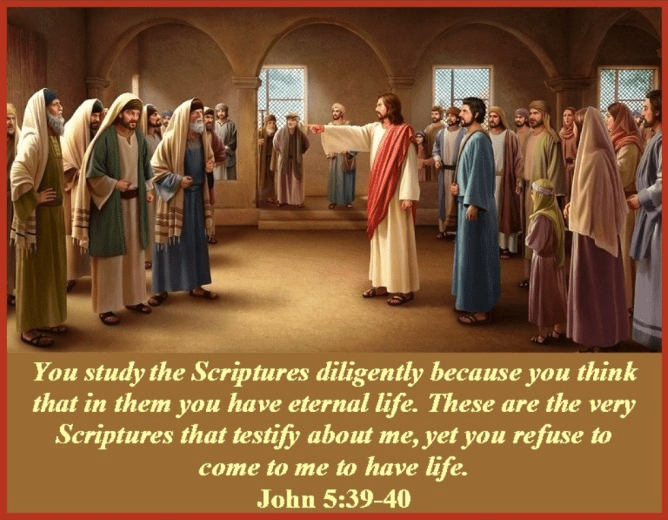
    43 The following day Jesus wanted to go to Galilee, and He found Philip and said to him, “Follow Me.” 44 Now Philip was from Bethsaida, the city of Andrew and Peter. 45 Philip found Nathanael and said to him, “We have found Him of whom Moses in the law, and also the prophets, wrote—Jesus of Nazareth, the son of Joseph.” 46 And Nathanael said to him, “Can anything good come out of Nazareth?” Philip said to him, “Come and see.” 47 Jesus saw Nathanael coming toward Him, and said of him, “Behold, an Israelite indeed, in whom is no deceit!” 48 Nathanael said to Him, “How do You know me?” Jesus answered and said to him, “Before Philip called you, when you were under the fig tree, I saw you.” 49 Nathanael answered and said to Him, “Rabbi, You are the Son of God! You are the King of Israel!” 50 Jesus answered and said to him, “Because I said to you, ‘I saw you under the fig tree,’ do you believe? You will see greater things than these.” 51 And He said to him, “Most assuredly, I say to you, hereafter you shall see heaven open, and the angels of God ascending and descending upon the Son of Man.”

    The news of Jesus is spreading as Jesus gathers His disciples. He finds Philip, and tells him, “Follow Me.” Philip was from Bethsaida, the same city as Andrew and Peter. Then, Philip went and found Nathanael, and told him that he, Andrew, and Peter, had found the Messiah. It is Him, Nathanael! You know…..“Him of whom Moses in the law, and also the prophets, wrote—Jesus of Nazareth, the son of Joseph.” Like Andrew, Philip wanted to share the good news of finding the Messiah with those closest to him. We can infer that Philip and Nathanael were good friends, since Philip went to him with this news first. Then, Nathanael pops off with an offensive comment. He says, “Can anything good come out of Nazareth?” Nathanael is clearly showing prejudice against anyone who comes from Nazareth! His tone jumps right off the page! He’s poking fun at Philip for even suggesting that the Messiah would come from there. In Nathanael’s eyes, no one who mattered could come from Nazareth. Nazareth was a small, poor town. The people were a little rough around the edges as we might call them today. I even found one commentator who described it as a backwater town.This is a lesson in itself for us. Have we ever judged someone by what side of town they lived on, or what area of the country they lived in? Or by their family name? We should never judge anyone because of where they are from, whether it’s a rich neighborhood (ex. Everyone from there is a snob.) or a poor or crime-ridden area (ex. Thugs and low-lifes live there.) No one can help where they are born or who they are born to. We are all the same to God. (Romans 2:11) Then comes Philip’s response! I love it! No arguing. No getting defensive. Just three simple words, “Come and see.” This is how we need to respond when people are condescending to us about our beliefs. “Come and see. Let’s discuss it. Let’s look in the Bible, and see what God says about it.” Philip is such a great example to us. I love how Jesus was ready for Nathanael! He knew Nathanael’s heart. Nathanael thought a little too highly of himself, and Jesus brought him down a few notches. Here is the statement from Jesus to Nathanael in verse 47 in today’s language, “Oh look, here is someone from ______(wherever), how perfect you must be!” Nathanael is like….. “How do You know me?” Then Jesus said, paraphrasing, “I saw you before Phillip told you about Me, when you were standing under a fig tree.” Jesus let Nathanael know in no uncertain terms that He knew him before ever meeting Him, but more importantly Jesus knew Nathanael’s heart, and his spiritual condition. Jesus knew Nathanael was holding on to some thoughts of a prejudiced nature. He knows our spiritual condition as well…..every second that we live. He knows if we hold these types of prejudices in our hearts as well. 

    And then…..in verse 49, we see Nathanael do a complete 180! He went from scoffing at his friend Philip for following this man from Nazareth, to confessing Him as God’s Son and the King of Israel! But what l love is Jesus’ response! Paraphrasing in my own words, “You think me seeing you under the fig tree was big? Just wait! This is nothing compared to what you will see later on.” Nathanael thinks he has seen something great, but he hasn’t seen anything yet! 

    Verse 51 is packed full of Old Testament prophecy. Jesus calling Himself the Son of Man comes from Daniel 7:13-14, “I was watching in the night visions, and behold, One like the Son of Man, coming with the clouds of heaven! He came to the Ancient of Days, and they brought Him near before Him. Then to Him was given dominion and glory and a kingdom, that all peoples, nations, and languages should serve Him. His dominion is an everlasting dominion, which shall not pass away, and His kingdom the one which shall not be destroyed.” This is a prophecy about the coming of the Messiah, and the kingdom that will never be destroyed is the Church. When Jesus spoke of the angels ascending and descending on the Son of Man, He was referring back to Jacob’s vision where he saw a ladder reaching to Heaven with angels ascending and descending on it (Genesis 28:12). All the while, God was at the top of the ladder promising Jacob that His family would be blessed (Genesis 28:13-15). Symbolically, Jesus is that ladder that connects earth and Heaven. He is our connection to God. He is the ladder between us and God. Without Jesus, we would have no hope of heaven, because we would have no ladder to get there. It is through Jesus that we can be saved. God gave us Jesus for that reason, because He knew that our sin would keep us out of heaven. God wants us to have the opportunity to be with Him, so He provided the way through His Son. God doesn’t want any of us to miss out on heaven. 2 Peter 3:9 tells us this, “The Lord is not slack concerning His promise, as some count slackness, but is longsuffering toward us, not willing that any should perish but that all should come to repentance.” So He gave us Jesus, our ladder to an eternity with Him. In Genesis 28:16:17, Jacob says, “How awesome is this place! This is none other than the house of God, and this is the gate of heaven!” Jesus was the “house of God” when He came in the flesh and dwelt among us. (John 1:14) And Jesus is the only gate that we can go through to gain eternal salvation. Have you walked through the gate yet? 

    Are you walking in the light? Are you in Christ? If you aren’t, I’d love to help you. Are you a member of the Lord’s church, but are struggling spiritually in your walk with Christ? If you are…..believe me, I’ve been there many times, and I’d love to help you. If you have any questions, please reach out. 

    God’s Plan of Salvation

    Below is the plan that God has set forth in His Word, for humankind to receive His grace that leads to salvation and an eternity with God in heaven. This plan is straight from the Bible. 

    We have to hear His word. (Romans 10:17) 

    Upon hearing the message of Jesus, we believe it. (Mark 16:16) 

    Then, we confess Jesus’ name before men. (Matthew 10:32) 

    Next, we repent of our sins. (Acts 2:38, Acts 3:19) 

    Finally, we are baptized into Christ for the remission of our sins.  (Acts 2:38, Matthew 28:18-20, Mark 16:16, Romans 6:3-4, Acts 22:16, 1 Corinthians 12:13, Galatians 3:26-27) After baptism, God adds us to His church. (Acts 2:47)

    Then, we remain faithful in our commitment to Christ until death. (Revelation 2:10, 2 Peter 2:20-22)

  • From Simon to Peter

    April 18th, 2025

    From Simon to Peter

    42 And he brought him to Jesus. Now when Jesus looked at him, He said, “You are Simon the son of Jonah. You shall be called Cephas” (which is translated, A Stone).

    Wouldn’t it be strange if someone that we had just met decided to change our name? “I’ve just met you, but your name isn’t Greta anymore. You will be _____.” Just imagine it! I am sure that would freak most of us out! But Jesus had the authority to change anyone’s name that He wanted to. He also knew the impact that Simon would have in the future for His kingdom, the church. In John 1:42, Jesus changed Simon’s name to Cephas/Peter which means a stone or a rock. And wasn’t Peter a rock? He was a foundational influence on the church of Christ in the first century! A rock symbolizes strength, reliability, and stability. It’s why we build our houses on a rock foundation. It’s why our lives are built on Jesus, the rock of ages. However, he wasn’t much of a rock on the night Jesus was crucified, now was he? He was literally like sand washing away as he denied Jesus three times. Jesus knew all along that Peter was going to deny him, yet he still saw the rock that he would be in the future for His kingdom. That’s a lesson for us. No matter what our past is, we can be a rock for Jesus in the future. And the future can start in the next minute! We don’t have to wait years down the road to begin to change. I have a past that was like sand just like Peter. I was weak, unreliable, and unstable….the complete opposite of a rock. We all have a past. Some have a more complicated past than others, but we all have one. But our past doesn’t matter to Jesus. Jesus sees past all our imperfections, all our past mistakes, all the way to our potential. He also knows if we are going to use our potential to actually do something for Him! You’ve heard of potential energy and kinetic energy, right? Warning, science lesson! Potential energy is stored energy that hasn’t been used yet. It’s different for every object depending on its position, properties, and the forces behind it. It is like a basketball in your hand that hasn’t been released yet. That ball has potential energy. Kinetic energy is energy in motion. It is that same basketball that is released from your hand, and goes through the net to win the game at the buzzer!  Our energy is either potential or kinetic. Is the basketball still in our hand waiting to be released? Is our potential for God’s kingdom still waiting to be released? Is our energy for God in motion? It’s up to us to turn our potential into reality. I want to be a rock for Jesus in my life. I’m a work in progress for sure. I have a long way to go. But…..I’m striving through the ups and downs of this life. Never let your past define you. Don’t let it steal your energy! Never give up! We will never truly reach our full potential, because Jesus is the bar that we are striving to reach. Peter didn’t reach it either. No human ever has. But…..we can reach new levels of potential every day of our lives simply by putting Him first, and then stepping outside our comfort zone every now and then….for Him. Are we turning our potential in God’s kingdom into a reality?  

    You know…..speaking of names…..we wear a new name after we become a disciple of Christ. It is a new identity, or it should be. It was foretold by Isaiah in chapter 62 and verse 2b, “You shall be called by a new name, which the mouth of the Lord will name.” It is called “Christian”, and it was first used at Antioch in Acts 17:26. We may look the same physically, but our speech, actions, reactions, behaviors, habits, etc. should look completely different to the world after we become Christians. What is most important to us should change as well. By the world’s standards, I am still Greta, but my identity is “Christian”. I didn’t always wear it well, but I desperately want to wear it well from now on. I hope and pray that from here on out, I will wear the name “Christian” with courage…..like a badge of honor…..without fear or shame…..with all glory going to My Savior and My Creator. 

    Are you walking in the light? Are you in Christ? If you aren’t, I’d love to help you. Are you a member of the Lord’s church, but are struggling spiritually in your walk with Christ? If you are…..believe me, I’ve been there many times, and I’d love to help you. If you have any questions, please reach out. 

    God’s Plan of Salvation

    Below is the plan that God has set forth in His Word, for humankind to receive His grace that leads to salvation and an eternity with God in heaven. This plan is straight from the Bible. 

    We have to hear His word. (Romans 10:17) 

    Upon hearing the message of Jesus, we believe it. (Mark 16:16) 

    Then, we confess Jesus’ name before men. (Matthew 10:32) 

    Next, we repent of our sins. (Acts 2:38, Acts 3:19) 

    Finally, we are baptized into Christ for the remission of our sins.  (Acts 2:38, Matthew 28:18-20, Mark 16:16, Romans 6:3-4, Acts 22:16, 1 Corinthians 12:13, Galatians 3:26-27) After baptism, God adds us to His church. (Acts 2:47)

    Then, we remain faithful in our commitment to Christ until death. (Revelation 2:10, 2 Peter 2:20-22)
  • Be an “Andrew”

    April 12th, 2025

    Be an “Andrew”

    John 1:40-42a

    40 One of the two who heard John speak, and followed Him, was Andrew, Simon Peter’s brother.

    41 He first found his own brother Simon, and said to him, “We have found the Messiah” (which is translated, the Christ). 

    42a And he brought him to Jesus.

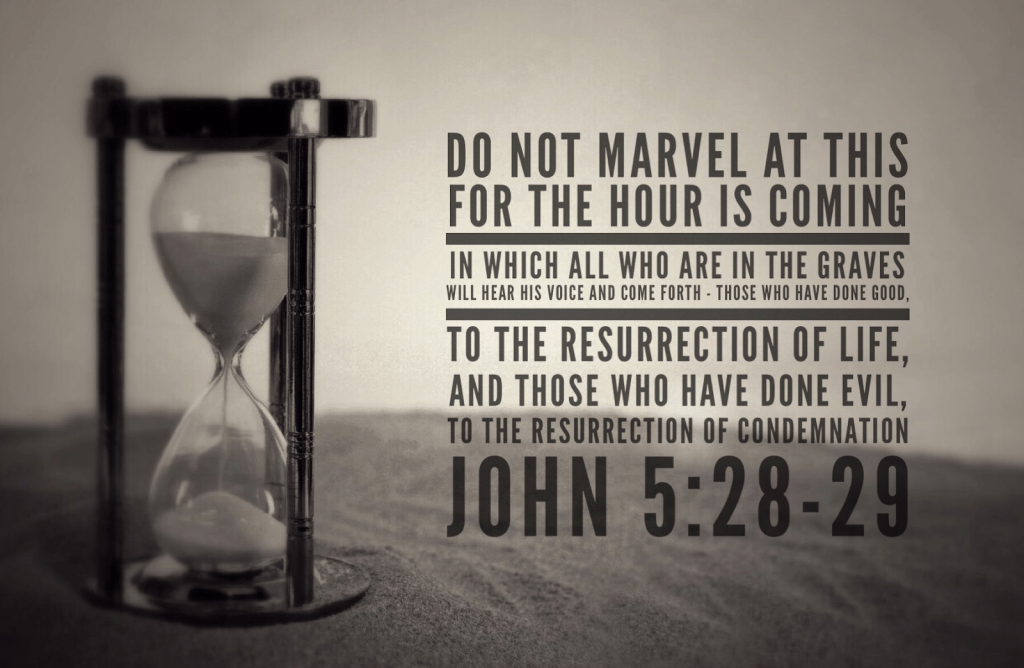
    What do we know about the apostle named Andrew? We know that Andrew and John the apostle, were following John the baptizer until John the baptizer pointed out “the Lamb of God” to them in John 1:35-36. At that point, they left John, and went to follow Jesus. They spent the rest of the day with Him. In verse 41, we see a pivotal point in Andrew’s life that He will forever be remembered for. It says that Andrew “first found His own brother Simon”. Because the text says that he “first” went to his brother, we can take this to mean that he went to others after that, and told them about finding “the Messiah”. And actually, Andrew was involved in introducing more people to Jesus as we read through the book of John. He brought the boy with the loaves and fish to Jesus (John 6:8). He also brought some Greeks  to Jesus who wanted to meet Him. Listen to John 12:20-22, “Now there were certain Greeks among those who came up to worship at the feast. Then they came to Philip, who was from Bethsaida of Galilee, and asked him, saying, “Sir, we wish to see Jesus.” Philip came and told Andrew, and in turn Andrew and Philip told Jesus.” The Greeks approached Philip, but Philip went to Andrew to make this happen. Andrew made the connection happen. Andrew seemed to bring people together. 

    Andrew was one of the first ones to begin following Jesus, yet we don’t hear his name mentioned very often after this……not like his brother Simon Peter. But…..that is ok. Andrew did what Andrew could do. Andrew seems to be one of those “behind the scenes” workers who did a lot of the little things for the ministry of Jesus that we will never know about. We have people like this in the Lord’s church today. They are always working for the Lord, but no one ever sees what they do. They are not public speakers. They are not Bible class teachers. But, like Andrew, they introduce people to Jesus. They shine the light of Jesus with every breath they take. They invite people to church. They send people cards. They speak to visitors, and invite them to come back. They take food to people. The person who invites someone to church is just as important as the person who actually teaches them the gospel. 

    Andrew loved his brother…..so much that he wanted him to meet Jesus. Of course, it is only natural that he would want to tell his family about Jesus first. We would all do the same. Andrew was also fully convinced that Jesus was the Messiah. There didn’t seem to be any doubts in Andrew’s mind about who Jesus was. That is all Jesus wants from any of us…..for us to have no doubts about Him, and for us to spread the word about Him. Another quality that I see in Andrew is humility. Andrew met Jesus first, but then took a step back while his brother kind of stole the show. Simon Peter was the more vocal one, sometimes too vocal for his own good. Simon Peter was the one who walked on water. Simon Peter was the one who preached the first gospel sermon. Where did Andrew go? Well…..Andrew didn’t go anywhere. I’m sure he was always there doing the legwork as I like to call it. There are “Andrews” in this world, and there are “Simon Peters” in the world. The “Simon Peters” might get more attention here on earth than the “Andrews”, but in heaven there will be no difference made between the two. Jesus loves and appreciates them both, and they will both be rewarded. Don’t ever think that you don’t have anything to offer the kingdom. You can be an “Andrew” for the kingdom, and bring others to meet Jesus. 

    Are you walking in the light? Are you in Christ? If you aren’t, I’d love to help you. Are you a member of the Lord’s church, but are struggling spiritually in your walk with Christ? If you are…..believe me, I’ve been there many times, and I’d love to help you. If you have any questions, please reach out. 

    God’s Plan of Salvation

    Below is the plan that God has set forth in His Word, for humankind to receive His grace that leads to salvation and an eternity with God in heaven. This plan is straight from the Bible. 

    We have to hear His word. (Romans 10:17) 

    Upon hearing the message of Jesus, we believe it. (Mark 16:16) 

    Then, we confess Jesus’ name before men. (Matthew 10:32) 

    Next, we repent of our sins. (Acts 2:38, Acts 3:19) 

    Finally, we are baptized into Christ for the remission of our sins.  (Acts 2:38, Matthew 28:18-20, Mark 16:16, Romans 6:3-4, Acts 22:16, 1 Corinthians 12:13, Galatians 3:26-27) After baptism, God adds us to His church. (Acts 2:47)

    Then, we remain faithful in our commitment to Christ until death. (Revelation 2:10, 2 Peter 2:20-22)

  • Come and See

    April 5th, 2025


    Come and See

    John 1:33-40

    33 I did not know Him, but He who sent me to baptize with water said to me, ‘Upon whom you see the Spirit descending, and remaining on Him, this is He who baptizes with the Holy Spirit.’ 34 And I have seen and testified that this is the Son of God.” 35 Again, the next day, John stood with two of his disciples. 36 And looking at Jesus as He walked, he said, “Behold the Lamb of God!” 37 The two disciples heard him speak, and they followed Jesus. 38 Then Jesus turned, and seeing them following, said to them, “What do you seek?” They said to Him, “Rabbi” (which is to say, when translated, Teacher), “where are You staying?” 39 He said to them, “Come and see.” They came and saw where He was staying, and remained with Him that day (now it was about the tenth hour). 40 One of the two who heard John speak, and followed Him, was Andrew, Simon Peter’s brother.

    Why did John come baptizing with water? John reveals the answer to that question to us in verse 33. God sent Him to baptize with water, and John did what God sent Him to do. He also says that God told Him what sign He would send to reveal His Son. The Spirit in the form of a dove descended and remained on Jesus revealing Him as the Son of God at His baptism. John’s baptism was a baptism of repentance, and was for the purpose of preparing the people’s hearts for the coming of Christ. It was to get the people to become self-aware of their sin and turn from it, and begin to look for the Messiah who would be the ultimate sin-remover, and bring with Him the grace needed for salvation. 

    Why are we baptized in water today? We are baptized for the remission or washing away of sins. (Acts 2:38) Along with confession and repentance, we are baptized to save our souls. (Mark 16:16) Baptism is how we “call upon the name of the Lord”. (Acts 22:16) Baptism is how we die to sin. (Romans 6:3-4) Baptism is the reenactment of Christ’s death, burial , and resurrection. We are buried with Christ in baptism. (Romans 6:3-4) Baptism is how we become “in Christ”, and how we put on Christ. (Galatians 3:27) And finally, we are baptized because it is a commandment of Jesus. (Matthew 28:18-20, Mark 16:16) After baptism, God adds us to His church, which is the one body of Christ. We are baptized into that one body. (Acts 2:47, 1 Corinthians 12:12-14)

    Then, in verse 34, John actually makes that great confession and testifies that Jesus is the Son of God. In verses 35 and 36, it is the next day, and we see John the baptizer standing with two of his disciples. John sees Jesus walking by, and says to his two followers, paraphrasing, “Look, there He is! He is the Lamb of God! He is who you need to follow from now on!” John is not worrying about keeping His followers, because that is not his mission. 

    Verse 37 completely reveals John’s mission in life…..to gain followers and then transfer those followers over to Jesus. This is what he did when he pointed out the Messiah to the two men with him, and told them that Jesus was the Lamb of God. John said later in John 3:30 that he needed to decrease in order for Christ to increase. This is the humility of John the baptizer.

    It’s interesting that Jesus says in verse 38, “what” are you seeking instead of “who” are you seeking. Jesus wants to know their purpose for following Him. What do they want from Jesus? What do we seek? Everyone doesn’t have the right motives for following Him. Just because we attend church doesn’t automatically mean we are following Jesus. There are many reasons why people attend church such as, the music, the preacher, the youth program, the nice people or the potluck meals. Some people go because they feel guilty about how they are living their lives, and they think showing up at church will cancel out the sin in their lives. I’m ashamed that this was me in my younger years. My thoughts were, “I’m going to church so I’m good.” The men answered Jesus by addressing Him as “Rabbi”, which means teacher, asking where Jesus was staying. They weren’t interested in the location of Jesus’ home or what type of house He had. This was an expression of their desire to spend time with Jesus, no matter where He was staying. This told Jesus that they wanted to know Him personally. They wanted to visit with Him and learn more about Him. They wanted a relationship with Jesus. They had pure motives. When Jesus saw that they had good and honest hearts, He said “Come and see” in verse 39. The men accepted Jesus’ invitation, and remained with Jesus for the rest of the day. Verse 40 tells us the identity of one of the two men who left John the baptizer, and followed Jesus that day. It was Andrew, the brother of Simon Peter. Andrew would soon begin the spreading of the word about Jesus. We will be able to clearly see that Andrew’s motives are pure in the coming verses. 

    What were my motives for following Jesus in the past? What are my motives now? I have already said that I followed Jesus out of guilt for how I was living my life. But I was also following Jesus out of habit, because I was brought up to follow Jesus. I mean…..I didn’t want to disappoint mom and dad, right? But, I had to realize that I was disappointing my Creator and my Savior most of all. When that finally sank in, it devastated me. I had to figure out my own purpose for following Him separate from my family. It had to become my purpose, not my parents’ purpose for me, and not just a habit of “going to church when the doors were open”. I had to desire to “diligently seek” Jesus. (Hebrews 11:6) I had to realize that I was (and still am) a sinner, and Jesus is my One and only Savior. I had to truly feel the love that He has for me, and has always had for me, even at my worst, when I wasn’t giving Him a second thought. Here is the beautiful truth, my friends, found in Romans 5:8, “But God demonstrates His own love toward us, in that while we were still sinners, Christ died for us.” This verse devastates me, and at the same time, makes me so very grateful. This is the epitome of love. It is hard to fathom the kind of love that Jesus has for each one of us. Have you realized it yet? Do you understand that you owe Him your life? Jesus invites each of us to “come and see” with an honest heart. Are you willing to “come and see” the love of Jesus? 

    Are you walking in the light? Are you in Christ? If you aren’t, I’d love to help you. Are you a member of the Lord’s church, but are struggling spiritually in your walk with Christ? If you are…..believe me, I’ve been there many times, and I’d love to help you. If you have any questions, please reach out. 

    God’s Plan of Salvation

    Below is the plan that God has set forth in His Word, for humankind to receive His grace that leads to salvation and an eternity with God in heaven. This plan is straight from the Bible. 

    We have to hear His word. (Romans 10:17) 

    Upon hearing the message of Jesus, we believe it. (Mark 16:16) 

    Then, we confess Jesus’ name before men. (Matthew 10:32) 

    Next, we repent of our sins. (Acts 2:38, Acts 3:19) 

    Finally, we are baptized into Christ for the remission of our sins.  (Acts 2:38, Matthew 28:18-20, Mark 16:16, Romans 6:3-4, Acts 22:16, 1 Corinthians 12:13, Galatians 3:26-27) After baptism, God adds us to His church. (Acts 2:47)

    Then, we remain faithful in our commitment to Christ until death. (Revelation 2:10, 2 Peter 2:20-22)
  • Behold, The Lamb of God

    March 29th, 2025

    Behold, The Lamb of God

    John 1:29-32

    29 The next day John saw Jesus coming toward him, and said, “Behold! The Lamb of God who takes away the sin of the world! 

    30 This is He of whom I said, ‘After me comes a Man who is preferred before me, for He was before me.’ 

    31 I did not know Him; but that He should be revealed to Israel, therefore I came baptizing with water.”

    32 And John bore witness, saying, “I saw the Spirit descending from heaven like a dove, and He remained upon Him.

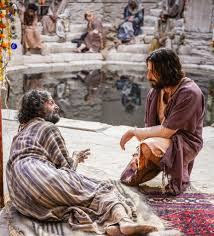
    John, the baptizer, testified about himself to the priests and Levites who were sent by the Pharisees in the previous verses. It is the following day, and now we see John testifying about Jesus. Verse 29 says that John saw Jesus coming toward him. He continues to be a brave witness for Jesus by not only pointing Him out, but also stating His purpose for being here. John calls Jesus, “the Lamb of God”, and says that He will take away the “sin of the world”. John is the only author in the New Testament who refers to Jesus as a “lamb”. This makes sense being that John’s gospel is so symbolic throughout it. John also refers to Jesus as a “lamb” in the book Revelation several times. (Revelation 5:6, 5:12, 7:9, 7:17, 12:11, 13:8, 19:7, and 21:23) Picture a lamb in your mind. Does it symbolize strength or power? Not at all. It is a symbol of sacrifice. It symbolizes the sacrifices that were made in the Old Testament. Also, what type of animal’s blood did God tell the Israelites to put on the doorposts in Exodus 12:3-11, during the Passover? It was “a lamb without blemish”…..the best most perfect lamb they could find. Jesus was a symbolic “lamb without blemish” in that He was a perfect, sinless sacrifice. He lived a perfect life as a human on this earth. Calling Jesus the Lamb was very significant, because of all that a lamb stood for in the Old Testament. When Isaiah prophesied about Jesus in Isaiah 53:7, he used a lamb to describe Him…..”He was oppressed and He was afflicted, yet He opened not His mouth; he was led as a lamb to the slaughter….” Lambs were born to be slaughtered as sacrifices. In the same way, Jesus was born to be a sacrifice for the sins of the entire world. The lambs that were sacrificed in the Old Testament did not take away sin. They only rolled sins forward, or were substitutes for sin until the next sacrifice could be made. The sin was still there. Jesus, the Lamb of God, was a sacrifice that completely removed sin, and not only from Israel, but from the whole world. The parallel between the Passover lamb and Jesus, the Lamb of God is so cool. The sacrifice of the Passover lamb represents God’s deliverance of His people out of Egyptian slavery just as Jesus pictured as a Lamb represents our deliverance from the slavery of sin through His sacrificial death on the cross. His resurrection represents our new life as a Christian after we die to sin through baptism and rise out of that watery grave to walk in newness of life. (Romans 6:2-11)

    In verse 30, John says, paraphrasing, “Jesus was born after me and came into His ministry after I did, but He is of a higher position than I am, because He existed before I or anyone else ever existed.” Again, John elevates the status of Jesus while lowering his status. This is what John the baptizer’s mission consists of…..elevating the Messiah, preparing people for His coming, and pointing people towards the Christ. 

    In verse 31, John says something perplexing, “I did not know Him…..” How could John not know Jesus? Jesus and John were cousins. Their mothers visited each other while they were both in the womb. We know that John was probably taught by his parents that cousin Mary’s baby would be the Savior of the world. Also, when Jesus came to be baptized, John said that Jesus should be the one baptizing him. So, John knew who Jesus was, so what did he mean when he said that he didn’t know Jesus? From what I have read, what John probably meant was that he wasn’t one of Jesus’ disciples who was following Him. John had a special mission…..a special calling by God…..all on his own. Here is verse 31 in my own words, “I did not know Him, but I came baptizing with water in order to reveal Him to Israel.” Verse 32 tells us how John’s baptism revealed the Lamb of God to Israel. The Spirit of God descended from heaven like a dove, and remained on Him. This proved that Jesus was the Son of God not only to John, but to everyone else as well. Obviously, God had told John to baptize during his mission of preparing the way for the Messiah in order for this very moment to take place……so that the Son of God would be revealed through the Holy Spirit at His baptism. John the baptizer played such a key role at the beginning of Jesus’ ministry. His coming fulfilled prophecy, caused people to become self-aware of their need for repentance of their sins, and revealed the Son of God at the perfect time. 

    When I think of John, I think of when Mary went to visit Elizabeth after she was visited by the angel, and told that she was going to be the mother of the Savior. Luke 1:41 says that when Mary greeted Elizabeth, the baby John leaped in her womb. I have always thought that this was one of the sweetest events recorded surrounding the births of John the baptizer and Jesus. It then says that Elizabeth was filled with the Holy Spirit, and called Mary “the mother of my Lord”. So…..I am assuming that the Holy Spirit told Elizabeth about the special baby that Mary was carrying. What a special moment for both of these women who were chosen by God to carry these two very special babies! They were much more than cousins. They were both fulfilled prophecies. 

    John gained a following when he came preaching the baptism of repentance, and baptizing with water. He gained lots of attention when he proclaimed his mission of “preparing the way of the Lord”. But did he become arrogant because of the attention he was getting? Did he elevate himself in any way? Not at all. His mission never changed, and he died because he was brave enough to point out the sin of a king. There are many wonderful qualities that we can point out about this man, John the baptizer. The two that stick out the most to me are humility and bravery. What if I had to truly be brave as a Christian today? What if my very life was threatened for the cause of Christ? Of course, in our country today, I am not threatened with bodily harm because of my belief in Christ. But…..I can be made uncomfortable by standing up for Jesus and the truth. I might lose friends. I might get made fun of. It is uncomfortable to be made fun of. It is uncomfortable and hurtful to lose friends when we are doing what we know is right in the sight of God. Am I willing to be uncomfortable for Christ who died for me? 

    Are you walking in the light? Are you in Christ? If you aren’t, I’d love to help you. Are you a member of the Lord’s church, but are struggling spiritually in your walk with Christ? If you are…..believe me, I’ve been there many times, and I’d love to help you. If you have any questions, please reach out. 

    God’s Plan of Salvation

    Below is the plan that God has set forth in His Word, for humankind to receive His grace that leads to salvation and an eternity with God in heaven. This plan is straight from the Bible. 

    We have to hear His word. (Romans 10:17) 

    Upon hearing the message of Jesus, we believe it. (Mark 16:16) 

    Then, we confess Jesus’ name before men. (Matthew 10:32) 

    Next, we repent of our sins. (Acts 2:38, Acts 3:19) 

    Finally, we are baptized into Christ for the remission of our sins.  (Acts 2:38, Matthew 28:18-20, Mark 16:16, Romans 6:3-4, Acts 22:16, 1 Corinthians 12:13, Galatians 3:26-27) After baptism, God adds us to His church. (Acts 2:47)

    Then, we remain faithful in our commitment to Christ until death. (Revelation 2:10, 2 Peter 2:20-22)

  • John 1:25-28

    March 22nd, 2025

    John 1:25-28

    25 And they asked him, saying, “Why then do you baptize if you are not the Christ, nor Elijah, nor the Prophet?”

    26 John answered them, saying, “I baptize with water, but there stands One among you whom you do not know. 

    27 It is He who, coming after me, is preferred before me, whose sandal strap I am not worthy to loose.”

    28 These things were done in Bethabara beyond the Jordan, where John was baptizing.

    “Why are you baptizing if you are not the Christ, nor Elijah, nor the Prophet?” It’s as if they are saying, “You are no one important! What gives you the right to baptize people?” This is the question that the messengers sent by the Pharisees are asking in verse 25. This is interesting for two reasons. First, it seems that they already know something about baptism. And they must expect the Messiah to baptize when He comes, or else why would they ask this question in this way. The Jews practiced ceremonial/ritual washing to remove uncleanness, but it never said that it was to remove sin, and it wasn’t a complete immersion. And, each person washed himself/herself in the ritual cleansings, but John was doing the “washing” in this scenario. This was something new to the Jews, but with a hint of familiarity. And, it also seems like they think that “the Christ” and “the Prophet” are two different people who are coming. We know that “the Prophet” and “the Christ” are one and the same.

    In verse 26 and 27, John continues to downplay himself, and elevate the Messiah. This the third time we see John the baptizer’s status lowered. It happened once when the writer said that he was not the light, but came to bear witness to the light. (John 1:8)  It happened a second time when John answered “no” when his interrogators asked him if he was the Christ. (John 1:20) Now he says, paraphrasing, “I baptize with water, but He who comes after me is so much greater than I am. I am not worthy to even loosen His sandal strap.” John is saying, “I am nothing compared to Jesus, but I’m here to point Him out to you”. Then, there is the part in verse 26 where John says that there is One who stands among you that you don’t know. He is saying, paraphrasing, “He is One of you, a Jew, but you don’t know Him. He is walking among you at this time in history. But…..you don’t know who He is yet, because He hasn’t made Himself known to the public yet.” I wonder if he was implying that they would never know Him. Was this John’s way of telling them that they were going to reject Him? This account is found in Matthew 3:7-12, Mark 1:6-8, and Luke 3:7-18. There is a whole lot more to this account than what John records in these verses. John had a lot more to say to these messengers than is recorded here. That is why we have four gospels to study and compare. John calls the Pharisees and Sadducees, “Brood of vipers” in both Matthew’s and Luke’s accounts. Of course, we know from the Gospel of John that the Pharisees were not actually there, but had sent priests and Levites to question John for them. I’m sure they did not like it when their messengers returned to tell them all that John the baptizer had to say in his “brood of vipers” speech. This is the full discourse of what John the baptizer said according to the Gospel of Matthew,  “Brood of vipers! Who warned you to flee from the wrath to come? Therefore bear fruits worthy of repentance, and do not think to say to yourselves, ‘We have Abraham as our father.’ For I say to you that God is able to raise up children to Abraham from these stones. And even now the ax is laid to the root of the trees. Therefore every tree which does not bear good fruit is cut down and thrown into the fire. I indeed baptize you with water unto repentance, but He who is coming after me is mightier than I, whose sandals I am not worthy to carry. He will baptize you with the Holy Spirit and fire. His winnowing fan is in His hand, and He will thoroughly clean out His threshing floor, and gather His wheat into the barn; but He will burn up the chaff with unquenchable fire.” (Matthew 3:7-12) Wow! He really told them how it was going to be! It is almost as if John knows that these are the ones who will reject the Messiah. No, they didn’t know Jesus, and they didn’t want to know Jesus, and John seemed to know it. All this happened beyond the Jordan near Bethabara, where John was baptizing. 

    As we travel through the gospel of John, we will see that the religious leaders of the day had a picture of what they wanted in a Messiah. Jesus would not fit that description, so they crucified Him. Isn’t this true today? The “Jesus” of the Bible is not the “Jesus” that so many claim to follow today. We can’t claim to know Jesus, but at the same time reject His teachings and commandments. Jesus came to save us, but He set the terms of salvation. I can’t decide how I want to be saved. Jesus tells me how to be saved. I can’t make up my own rules about how to live as a Christian. Jesus tells me how to live as a Christian. I can’t begin to live up to it. I know that. But that doesn’t mean I can make it up as I go. I just have to try my very best to live the way He lived, treat others the way He treated them, and speak the truth the way He did. My best will never be good enough. No one’s will. And this is why He had to die for us. Let’s just all make sure we are following the real Jesus, and not trying to make Him into someone more suited to our way of life. I’ve been guilty of this in my past without even realizing it. Let’s conform our lives to Jesus instead of trying to conform Jesus to our lives. 

    Are you walking in the light? Are you in Christ? If you aren’t, I’d love to help you. Are you a member of the Lord’s church, but are struggling spiritually in your walk with Christ? If you are…..believe me, I’ve been there many times, and I’d love to help you. If you have any questions, please reach out. 

    God’s Plan of Salvation

    Below is the plan that God has set forth in His Word, for humankind to receive His grace that leads to salvation and an eternity with God in heaven. This plan is straight from the Bible. 

    We have to hear His word. (Romans 10:17) 

    Upon hearing the message of Jesus, we believe it. (Mark 16:16) 

    Then, we confess Jesus’ name before men. (Matthew 10:32) 

    Next, we repent of our sins. (Acts 2:38, Acts 3:19) 

    Finally, we are baptized into Christ for the remission of our sins.  (Acts 2:38, Matthew 28:18-20, Mark 16:16, Romans 6:3-4, Acts 22:16, 1 Corinthians 12:13, Galatians 3:26-27) After baptism, God adds us to His church. (Acts 2:47)

    Then, we remain faithful in our commitment to Christ until death. (Revelation 2:10, 2 Peter 2:20-22)

  • John 1:21-24

    March 15th, 2025

    John 1:21-24

    21 And they asked him, “What then? Are you Elijah?” He said, “I am not.” “Are you the Prophet?” And he answered, “No.”

    22 Then they said to him, “Who are you, that we may give an answer to those who sent us? What do you say about yourself?”

    23 He said: “I am

    ‘The voice of one crying in the wilderness:
    “Make straight the way of the Lord,” ’

    as the prophet Isaiah said.”

    24 Now those who were sent were from the Pharisees.

    The priests and Levites continue to question John by asking him if he is Elijah or the Prophet. John says “no” to both questions. But Jesus says in Matthew 17:12-13 that John is the Elijah that is prophesied about in Malachi 4:5-6. So why did John say “no” when they asked him if he was Elijah. In Luke 1:16-17, it says, speaking of John the baptizer, “And he will turn many of the children of Israel to the Lord their God, and he will go before him in the spirit and power of Elijah, to turn the hearts of the fathers to the children, and the disobedient to the wisdom of the just, to make ready for the Lord a people prepared.” The Jews thought that John was Elijah reincarnated, but this was not the case. He would come in the spirit and power of Elijah. He is comparable to Elijah, but he is not Elijah. Later, Elijah was transfigured on the mount with Moses in Matthew 17:3. John and Elijah were not the same person. This is what John meant when he said he wasn’t Elijah. He is not Elijah risen from the dead. He is not the Prophet that Moses spoke of in Deuteronomy 18. That Prophet is Jesus, and John is not Jesus. That makes me wonder if the Jews think that both a Prophet and a Messiah are coming. Do they think that the Prophet and the Christ are two different people who are coming?

    In verse 22, they press John all the more. They were sent to get answers, and they didn’t want to go back empty-handed. So they said, paraphrasing, “So who are you? We have to have an answer for the people who sent us. What do you have to say for yourself?” They seem to be getting a little impatient with John at this point.

    Then John gave them an answer in verse 23. He quoted Isaiah 40:3 and claimed that he was “the voice of one crying in the wilderness: Make straight the way of the Lord.” He was the forerunner. He was here to point people to Jesus. The rest of this prophecy from Isaiah 40:3b-5 says, “Make straight in the desert a highway for our God. Every valley shall be exalted and every mountain and hill brought low; The crooked places shall be made straight and the rough places smooth; The glory of the Lord shall be revealed, and all flesh shall see it together; For the mouth of the Lord has spoken.” When the way is prepared and the path is made straight, what will we all see? Jesus! Remember John 1:14? “And the Word was made flesh and dwelt among us, and we beheld His glory, the glory as of the only begotten of the Father, full of grace and truth.” It is AMAZING how everything in the Bible fits together like a puzzle! 

    In verse 24, it is revealed that the Pharisees are behind this interrogation of John. I wonder why they sent others to ask John who he was? Why didn’t they come themselves? I don’t know the answer other than they thought they were too high and mighty to go themselves. Did the Pharisees feel their authority threatened by John the baptizer? Yes! The Pharisees had heard that “John the baptizer” was telling people to repent and prepare for the coming of the Messiah. In the eyes of the Pharisees, he had no authority to do this. They were supposed to be in control of all religious matters…..not some man who suddenly came out of nowhere preaching this baptism of repentance. They sent the priests and Levites to question John in hopes of discrediting him. “Are you the Messiah? Elijah? The Prophet? If you aren’t one of these people, then nothing you are saying or doing matters.” Then, the prophecy from Isaiah 40 comes pouring out John! These priests and Levites would have known that prophecy well. They couldn’t discredit Isaiah, right?

    To relate this to us today, we have people who don’t believe in the Bible who try to discredit God Himself. We have people from different religions who try to discredit Christianity. We have people who try to discredit Jesus Christ, because they don’t believe He is God’s Son. We, in the Lord’s church, have other religious bodies who try to discredit the scriptures that we show them regarding how to worship and how to be saved. We have people who “cherry-pick” the parts of the Bible that they want to follow, but work super hard to find reasons to discredit the parts that don’t line up with their lifestyle. The wonderful thing that we can always count on is that God, His Son, and His Word cannot and will not ever be discredited. Here we are in 2025, and still going strong! Let’s just keep running the race, Sisters! 

    Are you walking in the light? Are you in Christ? If you aren’t, I’d love to help you. Are you a member of the Lord’s church, but are struggling spiritually in your walk with Christ? If you are…..believe me, I’ve been there many times, and I’d love to help you. If you have any questions, please reach out. 

    God’s Plan of Salvation

    Below is the plan that God has set forth in His Word, for humankind to receive His grace that leads to salvation and an eternity with God in heaven. This plan is straight from the Bible. 

    We have to hear His word. (Romans 10:17) 

    Upon hearing the message of Jesus, we believe it. (Mark 16:16) 

    Then, we confess Jesus’ name before men. (Matthew 10:32) 

    Next, we repent of our sins. (Acts 2:38, Acts 3:19) 

    Finally, we are baptized into Christ for the remission of our sins.  (Acts 2:38, Matthew 28:18-20, Mark 16:16, Romans 6:3-4, Acts 22:16, 1 Corinthians 12:13, Galatians 3:26-27) After baptism, God adds us to His church. (Acts 2:47)

    Then, we remain faithful in our commitment to Christ until death. (Revelation 2:10, 2 Peter 2:20-22)
  • John 1:17-20

    March 8th, 2025

    John 1:17-20

    17 For the law was given through Moses, but grace and truth came through Jesus Christ. 

    18 No one has seen God at any time. The only begotten Son, who is in the bosom of the Father, He has declared Him.

    19 Now this is the testimony of John, when the Jews sent priests and Levites from Jerusalem to ask him, “Who are you?”

    20 He confessed, and did not deny, but confessed, “I am not the Christ.”

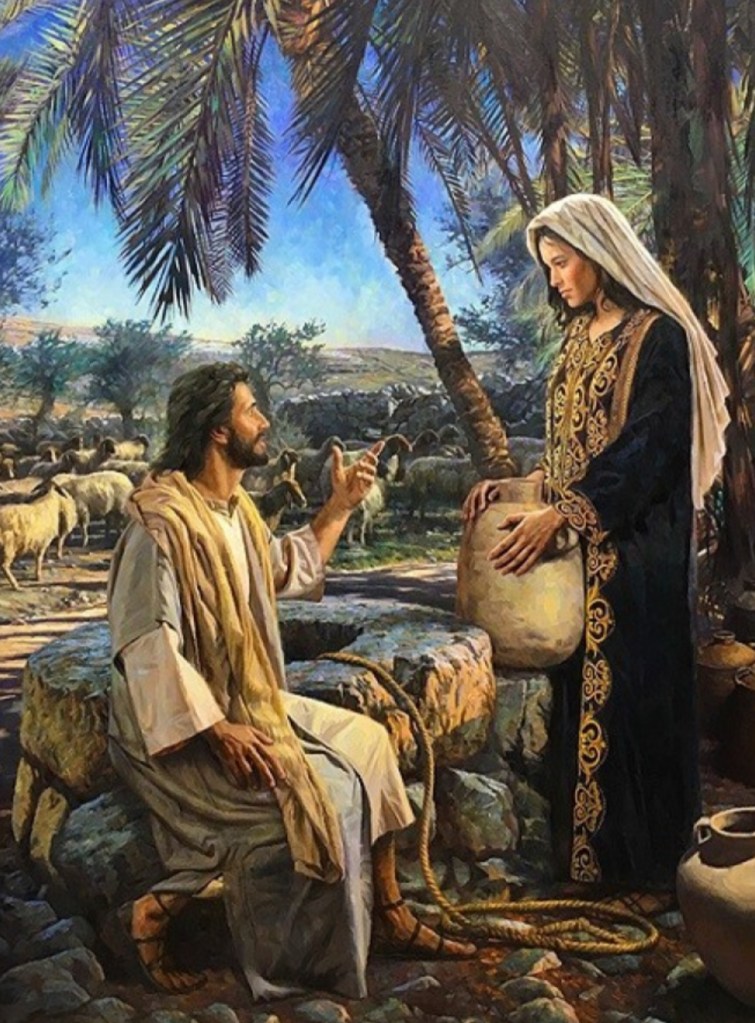
    God granted us the fullness of His grace when He sent us Jesus Christ. Does that mean that there was no grace in the law of Moses? No, not at all. We saw God’s grace continually throughout the Old Testament. In verse 16, we saw the phrase “grace for grace” which means the grace shown through Jesus Christ is superior to the grace shown in the Old Testament, because it is the full measure of God’s grace. In verse 17, we see the comparison between the law of Moses and the law (grace and truth) of Christ. Let’s talk about the attributes of the law of Moses, and why it had to come before the full measure of grace that came through Jesus Christ. First of all, the law of Moses revealed God’s grace by revealing the character and will of God. The law was very clear about what God expected of them. God had already delivered them out of Egyptian slavery so God was already showing them grace. The law of Moses was not a burden. It was a blessing from a gracious God who wanted to show His children what He expected of them. God’s laws are not just a bunch of rules to make life hard. His laws and statutes are all for our own good. God sees the big picture of what is best for us. God let His people know what He expected of them in detail so they would have no excuse not to obey Him. That is grace. God wouldn’t be a very good Father if He didn’t tell us what to expect from Him. We do this with our own children, because we love them. Second, the law of Moses revealed the sinfulness of humans. As the law revealed God’s character, it also revealed our character as human beings. The law revealed that we as humans could never measure up to God. Our character could never match God’s. But God didn’t strike everyone down for every sin they committed. He showed grace to His people time and time again. There were times when specific people were struck down immediately, because they were in complete rebellion to God, but if you think about it, God showed His people grace the majority of the time. Remember, God knows hearts. He knows them now, and He knew them then. He could see if a person was truly penitent for not. Romans 3:23 says, “all have sinned and fall short of the glory of God”, but then a couple of verses down in Romans 3:25 it says that “in His forbearance God had passed over the sins that were previously committed”. Passing over sins is grace. So, the law of Moses was a tutor to prepare humans for the grace and truth of Christ. The law taught humans about God and about themselves, and proved to them that they could never measure up to God’s standard without an advocate…..without a Savior. Also, God’s grace and truth in the old testament was for the nation of Israel only, but Jesus brought the extra measure of grace, not only for the nation of Israel, but for all people. 

    In verse 18, John reiterates the fact that no one has ever seen God. Even Moses, who spoke face to face with God like a friend, could not see God in all His glory. (Exodus 33:11) In Exodus 33:18, Moses asked God to show him His glory. In the following verses of Exodus 33:19-23, God told Moses, paraphrasing, “My goodness will go before you, and I will be gracious and show compassion to whom I will, but you cannot see my face, because no man can see Me, and survive. You stand here on the rock beside me. I will pass by you as you are in the cleft, shielding you with my hand as I pass. Then I will take my hand away when I am past you. You will be able to see my back, but not my face.” Ezekiel fell down on his face at the very appearance of the likeness of God. (Ezekiel 1:28) John fell as though he was dead at the feet of Jesus when he saw the vision in Revelation 1:17. No one except Jesus has seen God. Jesus is unique, the one and only Son, who has not only seen God, but is God. There is no one who is in a closer relationship with the Father, than Jesus. The phrase “in the bosom of the Father” shows us the close relationship that the Father and the Son have. Later in John 14:6, Jesus says that if anyone has seen Him, he has seen the Father. 

    Verse 19 begins John’s testimony of himself. It began with John being questioned by priests and Levites who were sent by the Jews to find out who he was. They weren’t interested in John personally. They just wanted to know if he was the Messiah. John immediately confessed that he is not the Messiah. We have already been told in John 1:8 that John was not the light, but that he was sent to bear witness of the light. John knew his place and his purpose, and he never allowed himself to be perceived as more than he was. His humility is a great example to us today. He is questioned more by these priests and Levites in the coming verses. 

    Just as a side note, I often think of how Jesus felt about John. In Matthew 11:11, Jesus says, “Assuredly, I say to you, among those born of women there has not risen one greater than John the Baptist; but he who is least in the kingdom of heaven is greater than he.” In Matthew 14, we read of John the baptizer’s horrible, violent death. Jesus went off to be alone after hearing about it from his disciples. We know that Jesus knew where John was in a spiritual sense. John was in paradise. But it didn’t change the fact that Jesus was sad to hear that John was murdered in such a violent way. John the baptizer was a bold witness for Jesus, as we should be bold witnesses for Him today. Am I being a bold witness for my Savior in my life?

    Are you walking in the light? Are you in Christ? If you aren’t, I’d love to help you. Are you a member of the Lord’s church, but are struggling spiritually in your walk with Christ? If you are…..believe me, I’ve been there many times, and I’d love to help you. If you have any questions, please reach out. 

    God’s Plan of Salvation

    Below is the plan that God has set forth in His Word, for humankind to receive His grace that leads to salvation and an eternity with God in heaven. This plan is straight from the Bible. 

    We have to hear His word. (Romans 10:17) 

    Upon hearing the message of Jesus, we believe it. (Mark 16:16) 

    Then, we confess Jesus’ name before men. (Matthew 10:32) 

    Next, we repent of our sins. (Acts 2:38, Acts 3:19) 

    Finally, we are baptized into Christ for the remission of our sins.  (Acts 2:38, Matthew 28:18-20, Mark 16:16, Romans 6:3-4, Acts 22:16, 1 Corinthians 12:13, Galatians 3:26-27) After baptism, God adds us to His church. (Acts 2:47)

    Then, we remain faithful in our commitment to Christ until death. (Revelation 2:10, 2 Peter 2:20-22)

  • John 1:13-16

    March 1st, 2025

    John 1:13-16

    13 who were born, not of blood, nor of the will of the flesh, nor of the will of man, but of God.

    14 And the Word became flesh and dwelt among us, and we beheld His glory, the glory as of the only begotten of the Father, full of grace and truth.

    15 John bore witness of Him and cried out, saying, “This was He of whom I said, ‘He who comes after me is preferred before me, for He was before me.’ ”

    16 And of His fullness we have all received, and grace for grace.

    God wants to be a Father to each one of us. Jesus has given us that right through belief and obedience to Him. (John 1:12) In verse 13, John tells us three ways that we DO NOT become children of God. First, he says no one is born into the family of God through their lineage. This was a big problem for the Jews. They thought that because they were of the lineage of Abraham that they were already children of God. (Luke 3:8) John wants to make it plain to the Jews that just because they have been God’s chosen people in the past, doesn’t mean that they automatically have the right to be children of God now. They will be expected to believe and obey Jesus to have that right. This goes for us today as well. Our bloodline or heritage does not automatically put us into Christ. Just because my parents are faithful members of the church doesn’t automatically give me a free pass to be a child of God. I am responsible for my own obedience. Second, he says that no one can earn the right to be a child of God through works done in the fleshly body. The Jews believed all their ceremonial acts such as circumcision, cleansing rituals, abstaining from specific unclean foods, and many other physical aspects of their religion would keep them in the family of God. I also think of what Jesus said about the giving of alms just to be seen of men. (Matthew 6:1-6) I think of the widow who gave her last two mites as opposed to the Jewish leaders who gave of their abundance just for show. No amount of money or works will buy us into the family of God. We are sinners, and need a Savior…..no matter how many works of merit we have credited to ourselves. Third, John says that it is not our will that puts us into the family of God. My desire to be in a relationship with Jesus will not put me in that relationship. I am granted that relationship through my obedience to Him. This cancels out the “ask Jesus to come into your heart” doctrine. Jesus does not come to us. We go to Him in humility and obedience, and He accepts us as the sinners that we are at that moment. However, once we make all things new in baptism, we are expected to transform into the image of Christ to the very best of our ability. It is our choice whether we come to Jesus or not. But it is not our choice how we come to Jesus. It has to be on His terms, not ours. It also cancels out the “join the church of your choice” doctrine. We don’t put ourselves into the family of God by joining it. We are added by God to His family after we obey Him in repentance and baptism. (Acts 2:47) Basically…..it is all God…..His grace is what saves us. Yes, we must obey, but if God didn’t show us grace, there would be no amount of obedience that would save us. 

    In verse 14, John says that “the Word became flesh”. This doesn’t mean that He stopped being God. He became God in the flesh. He still had all the same attributes as God. Only now, He has added flesh around those attributes. This verse proves without a shadow of a doubt that verses 1-5 of this chapter are referring to Jesus. Jesus became flesh and lived or dwelt among us. He made His dwelling place on earth. Dwelling in Greek means tabernacle or tent. God “tabernacled” with His people in the wilderness. (Exodus 40:34-35)  Now, He has sent “the Word”, His Son, to dwell or “tabernacle” with humankind in the flesh. God gave the Law through Moses to His people at Mount Sinai. Now, God has sent Jesus to reveal His Word to humankind. After God’s people broke their covenant with God, and were taken into Babylonian captivity, God was not with them. He did not “tabernacle” or dwell with them anymore. Ezekiel 43:4-5, Ezekiel 44:4, and Haggai 2:6-9 prophesy of a time when the glory of the Lord will return to the temple. The verses in Haggai even say that “the latter glory of this house will be greater than the former”. But…..when the people come out of captivity, that never happens. God didn’t come to the temple like He came to the tabernacle before. Those verses are referring to the coming of Jesus in the flesh. Jesus is that greater temple. God will “tabernacle” (dwell) with humankind through the person of Jesus Christ. John says, “we beheld His glory”, meaning he and the other apostles got to witness Jesus in the flesh. John calls Jesus the “only begotten of the Father”. This means “one and only Son”. Jesus was in a class by Himself. There was no one like Him, and there would never be anyone else like Him. God was revealed in the person of Jesus Christ. Then, John says that Jesus was “full of grace and truth”. We see the grace of God in Jesus. Later, we read Jesus’ words as He hung on that cross of shame, “Forgive them for they know not what they do.” This is the grace of God. And then truth….. Jesus, the Word, was the definition of truth. Truth and faithfulness go hand in hand. Jesus was faithful to His Father in doing His will on earth, and faithful in His commitment to us as He died for our sins so that we can have hope. Then, He was resurrected from the dead, conquering death! That is the truth! 

    Isaiah foretold exactly what would happen to our Savior. “He is despised and rejected by men, A Man of sorrows and acquainted with grief. And we hid, as it were, our faces from Him; He was despised, and we did not esteem Him. Surely He has borne our griefs And carried our sorrows; Yet we esteemed Him stricken, Smitten by God, and afflicted. But He was wounded for our transgressions, He was bruised for our iniquities; The chastisement for our peace was upon Him, And by His stripes we are healed.” (Isaiah 53:3-5)

    Think about the humility it took for God to allow this, and for Jesus to come and voluntarily do this for us. Jesus got very little praise from anyone while He was here. He was born to be a sacrifice. Let’s remember that as Christians, we aren’t to do things in God’s service to gain the praise and attention of others. Jesus’ only motive while here on earth was to save souls. This should be our only motive as well. Also, if we are truly following Jesus, then we will be persecuted. Jesus said if the world hates you, just remember that the world hated me first. (John 15:18-21) 

    In verse 15, we move back to the testimony of John the baptizer. Here are John’s words, paraphrasing, “The one who comes after me will be greater than me, because He existed before me.” This is proof that John was sent from God. How else would John know that Jesus existed before Him unless God through the Holy Spirit had told Him?

    In verse 16, it says that, because of the fullness of Jesus Christ, we have received “grace for grace” or “grace upon grace”. This doesn’t mean that there was no grace before Jesus came. God showed grace to His people all down through the ages over and over again. It means that we receive the full measure of grace in the coming of Jesus Christ. It is not a knock at God’s grace that was shown in the Old Testament. God has always shown grace to His people. But Jesus…..Jesus brings ultimate grace…..the full measure of God’s grace. Jesus’ shed blood on the cross brought about this extra measure of grace. Animal blood could not bring about the grace needed for forgiveness of sins. It had to be perfect. Jesus was perfect. His blood was perfect, and powerful enough to cleanse past souls, present souls, and any future souls that come along. Questions: Do I truly understand the magnitude of what Jesus did 2000ish years ago? Do I truly understand the power that His blood wields? 

    Are you walking in the light? Are you in Christ? If you aren’t, I’d love to help you. Are you a member of the Lord’s church, but are struggling spiritually in your walk with Christ? If you are…..believe me, I’ve been there many times, and I’d love to help you. If you have any questions, please reach out. 

    God’s Plan of Salvation

    Below is the plan that God has set forth in His Word, for humankind to receive His grace that leads to salvation and an eternity with God in heaven. This plan is straight from the Bible. 

    We have to hear His word. (Romans 10:17) 

    Upon hearing the message of Jesus, we believe it. (Mark 16:16) 

    Then, we confess Jesus’ name before men. (Matthew 10:32) 

    Next, we repent of our sins. (Acts 2:38, Acts 3:19) 

    Finally, we are baptized into Christ for the remission of our sins.  (Acts 2:38, Matthew 28:18-20, Mark 16:16, Romans 6:3-4, Acts 22:16, 1 Corinthians 12:13, Galatians 3:26-27) After baptism, God adds us to His church. (Acts 2:47)

    Then, we remain faithful in our commitment to Christ until death. (Revelation 2:10, 2 Peter 2:20-22)

←Previous Page
1 2 3 4 5 6 … 10
Next Page→

Blog at WordPress.com.


Loading Comments...
 

    • Subscribe Subscribed
      • Spiritual Food for Women
      • Join 29 other subscribers
      • Already have a WordPress.com account? Log in now.
      • Spiritual Food for Women
      • Subscribe Subscribed
      • Sign up
      • Log in
      • Report this content
      • View site in Reader
      • Manage subscriptions
      • Collapse this bar